
 Nöbetçi Eczaneler




Operating since 2004, the facility produces solid oral forms of numerous Novartis drugs for treating conditions such as cancer, hypertension, high cholesterol, pain and malaria. Novartis Kurtköy Production Site invests significantly each year for continuous improvement and innovation and makes a substantial contribution to both the Turkish economy and global health.
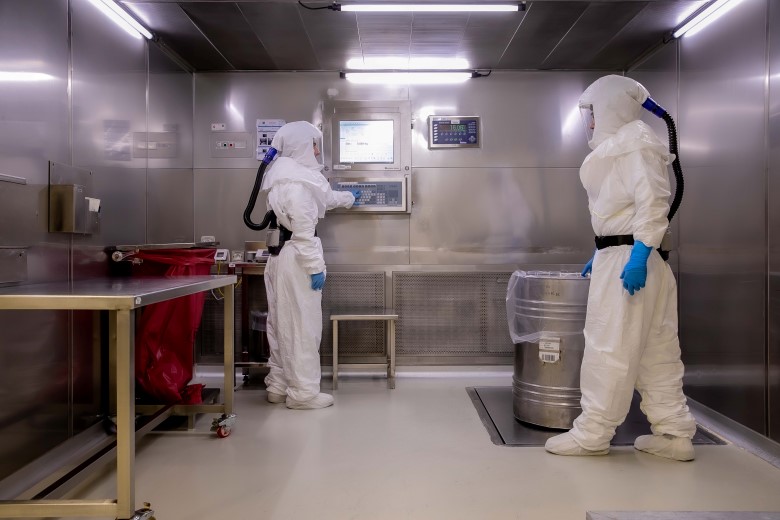
The Novartis Kurtköy Production Site, which began operations in August 2004, has grown significantly since its establishment and has become a vital part of the Novartis global production network. Starting with a team of 150, it now employs 410 people and stands out as a key pharmaceutical production plant within Novartis, specializing in oral solid forms (tablets, capsules, film tablets, effervescent) for both local and export markets. Spanning a total area of 110,000 m², with 52,000 m² dedicated to residential space, the facility boasts an impressive production capacity of 130 million boxes annually. Under the management of Site Head Filiz Gündoğmuş, it serves the Turkish market and exports to 120 countries worldwide.
As part of the facility’s 20th anniversary celebrations, Natacha Theytaz, Novartis Country President, and Lutz Hegemann, Novartis Global Health and Sustainability President, attended the event and shared their insights. The event also featured a delegation from the Consulate General of Switzerland in Istanbul.

While celebrating the 20th anniversary of the Novartis Kurtköy site, Novartis Country President Natacha Theytaz highlighted the company’s longstanding presence and commitment to Turkiye. She stated, “Novartis has been operating in Turkiye since 1955. Our dedicated team of nearly 1,000 colleagues, working in development, production, the field, and at headquarters, is passionate about contributing healthcare. For twenty years, our Kurtköy site has been producing life-changing medicines, including key treatments for chronic diseases, as part of our global network of over 30 sites. In 2023 alone, we produced 80 different products, amounting to an impressive 107 million packs. These achievements underscore Novartis’ unwavering commitment to advancing healthcare, improving patients’ lives, and supporting Turkiye’s growth and development in partnership with various stakeholders.”

Lutz Hegemann shared, “In our Global Healt & Sustainability unit, our ambition is to ensure everyone can benefit from our innovation regardless of where they live or their socio-economic situation; and to maximize our social impact as a sustainable business. To realize this ambition, we combine global health and business capabilities to tackle unresolved global health challenges, such as malaria.” Emphasizing the importance of the Kurtköy facility to Novartis Global Health efforts, Hegemann added, “Since 2015, our colleagues at the Kurtköy site have been producing millions of treatments for malaria, a disease that still claims 600,000 lives globally each year. The dedication and hard work of our colleagues here play an essential role in tackling one of the world’s pressing health issues, making their contributions to the fight against malaria invaluable.”
Highlighting the importance of reducing environmental footprints as a key part of the Novartis strategy, Hegemann noted that June 5 is World Environment Day and reinforced the company’s environmental sustainability commitments: “We have set ambitious targets to minimize our impacts on climate, waste, and water. By 2030, we aim to achieve carbon neutrality across our value chain, and net zero carbon emissions by 2040. Additionally, we strive to become water and plastic neutral in our operations by 2030.”

Noting the intersection of plenatary and human health, Hegemann added: “While mitigation efforts such as a continued focus on net zero and carbon neutrality are crucial, we must also adapt and manage the continued impact of climate change on global health. It is at the interface of climate and human health — where diseases like malaria are exacerbated by climate change – where we must continue investsments in R&D that directly targets the climate-related threats, and ensure that the benefit of healthcare innovation reaches everyone.”