
 Nöbetçi Eczaneler




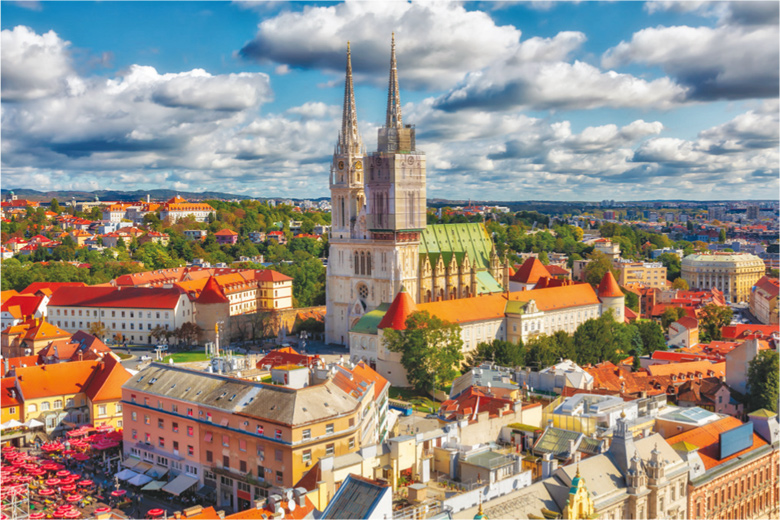
“Why we travel?” Because we want to leave the familiar, all the hustle and bustle, problems, sorrow behind and explore new things, learn new cultures and be amazed, maybe have fun with friends and maybe for some of us search for the meaning of life. Sometimes we all want to flee from our hometown, then you can go to Croatia which has become one of the top tourism destinations in the industry because it’s easy to reach, full of attractions and has a remarkable gastronomy.
Located on the east of the Adriatic, it is a fabulous country with its picturesque natural beauties, magnificent historical buildings with amazing stories behind and last but not the least the unforgettable delicious food. Zagreb, the capital, Dubrovnik, Split, Rijeka and Zadar are only some the gorgeous cities of the country of friendly and hospitable people.
A visit to Zagreb can give you an idea about modern Croatia. It’s a lively, cozy and really livable city in the heart of Europe. It’s home to 1/6 of Croatians and has 9000 bed capacity at the hotels and more than 8000 beds in the private accommodation. You can take a city walking tour or just walk all by yourself. The city is not tiring at all for an exploration walk.
Zagreb is a city rich in history and culture with a lively economy and commerce, besides being a city of science, education and sports. During Christmas, you can see that it’s like a charming aristocratic lady wearing her snow coat. People are ice-skating on the square very close to magnificent Hotel Esplanade which is strongly suggested for an unforgettable stay in Zagreb.
Located in the peaceful and quiet medieval Upper Town of Zagreb, at Kaptol, one of the most important historical tourist attractions is the Neo-Gothic Cathedral which dates back to late 19th century. The spires of this monumental sacral building are approximately 105 meters high. As the most defining landmark of Zagreb, this cathedral is a fascinating building which rises above others. It is the Roman Catholic Cathedral of the Assumption of Blessed Virgin Mary and Saints Stephan and Ladislav.
You can either walk or take a funicular ride up to the Grič hillside, which is the oldest part of the city. You can see Baroque Palaces, the Seat of the Government and the Parliament of the Republic of Croatia which flies the flags of Croatia and EU at the St. Mark’s Square. The parish church at the same square, St. Mark’s Church is another dominating historical and architectural value of Zagreb and Croatia. The building with its colorful roof tiles is symbolizing the seal of the city and are placed so that they represent the medieval coat of arms of Zagreb and the Triune Kingdom of Croatia, Dalmatia and Slavonia. Just for your information; From April to October there is a guard changing ceremony outside the church every Saturday and Sunday at noon.
Nearby is the famous Museum of Croatian Naïve Art founded in 1952. It is the first museum in the world devoted to naïve art. You can see a beautiful collection of amazing landscapes of Croatia and village scenes painted by self-taught peasant artists in the mid-20th century. Naïve art was created by untrained artists who didn’t receive any formal education. You will admire the paintings some of which are on canvas and some others are on glass. As an unusual attraction, the Museum of Broken Relationships awaits you there too. It’s located in a former palace and displays objects sourced from heartbroken relationships from all over the world. You shouldn’t miss the small galleries, museums and churches that are scattered all around the area, which really worth seeing.
Just a short walk down the hill is the Dolac Market, which is a must see point for gastronomy professionals and enthusiasts. You can buy food at the open stalls from farmer ladies who sell their own produce. While walking down the hill to the city center, you will come across the Stone Gate, locally known as Kamenita Vrata. It is one of the most important historical tourist sites in the Upper Town in Zagreb. It is believed to have been built in the 13th century and since then the city has been devastated many times and reconstructed again, but the worst disaster occurred in 1731. It was an enormous fire which devastated almost all the houses in the old city. But on this gate there was a painting of Virgin Mary holding Jesus Christ which miraculously survived the fire and since then the stone gate left the locals in belief that there is a miracle and it has become a shrine point where people stop and worship.
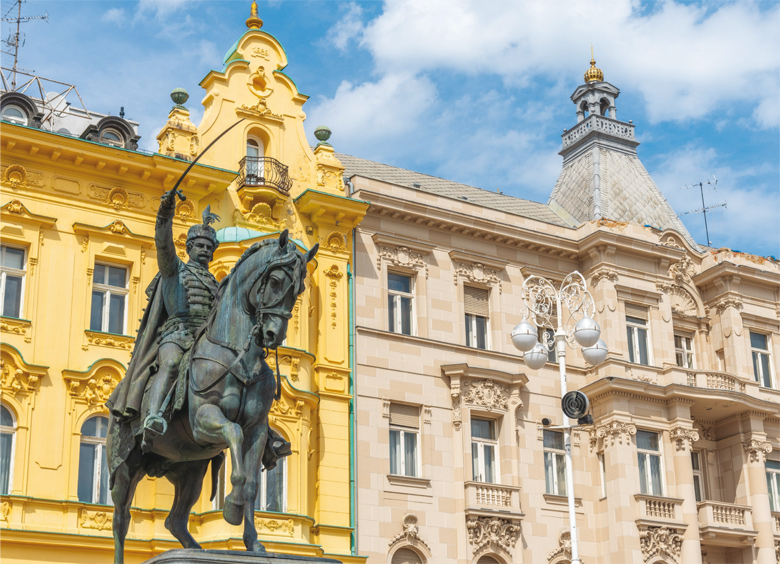
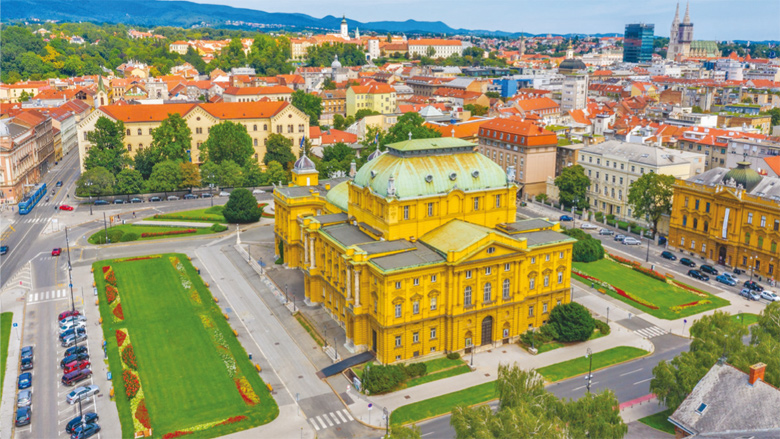
The Lower Town is the central Zagreb. It is very inviting with its beautiful parks and buildings which were mostly build in the late 19th and early 20th centuries. The Croatian Academy of Sciences and Arts, the Art Nouveau Palace of the Croatian State Archives and the majestic Croatian National Theater are all in this area. The Jalečić Square is the heart of the city with the Manduševac Fountain on the side of the square which is a symbol of Zagreb’s rich heritage. It’s believed that the first settlement in this area started around this fountain where people could find water for their needs. The Ban Jalečić Square is named after a national hero whose statue is in the middle of the square and he is such an important hero who still inspires the modern Croatians. On the side roads connecting to the Jalečić Square, like the busy Tkalčićeva Street, you will see that many people enjoy the charming outdoor cafes, go shopping, go to art shops or feed their souls with nice music.
All of these attractions are in walking distance to each other, you don’t need to get on a bus or take a taxi etc. You should enjoy the walk there. In any time of the year, Zagreb is such a nice, rich, friendly and amazing city that you will want to go there again because it will fascinate you.
CROATIAN PEARLS ON THE ADRIATIC: SPLIT AND SOLIN
Located in the western Croatia on the Dalmatian coast, Split is the second largest city of this beautiful country. Among so many beautiful coastal towns of Dalmatia, Split has a special place as a serious port. Its unique location between the mountains and the turquoise waters of the Adriatic Sea, its vibrant and modern life make Split travelers’ heaven. It is an ideal vacation hub for history, gastronomy, sun and sea lovers. Just a close look at the walls of the fortress by the harbor will tell you that the city’s ancient roots date back to Roman times. The history of the city started with the famous Roman emperor Diocletion, who built his palace here in today’s city of Split between 295 and 305 A.D. A very important UNESCO World Heritage Site in Croatia. Today, the historical complex, Diocletion’s palace is the core of the old town of Split, forms almost half of the old town and within the walls in the labyrinth like city hallways life continues. There are residents who live there.
During the retirement years of his life, Emperor Diocletion built a huge residence for his golden ages in his native place Dalmatia. The palace looks more like a fortress, but it was meant to be his palace and it has four parts and two main streets in it. It had 16 defense towers, but only three of them survived untill now. After his death, his palace has been used through generations by various civilizations such as Romans, Byzantines and Venetians. When Rome fell, Diocletion’s palace was abandoned and many years later a medieval town sprouted from this vast residence. The maze of narrow hallways of Diocletion’s vast palace formed the core of the city of today’s Split. The walls of the palace are 200 m. on each side. Back in the old days, they had cheap slaves labor and the technology to build such a huge palace like residence complex using bricks, stones and concrete. The basement of the palace was used as a garbage collecting area for a while but then in modern times it was cleaned, restored and opened to public use as a shopping arcade where you can find traditional handmade objects. The arcade leads to the grand entrance of the palace which was also the private quarter of the emperor.
The Roman emperors used to call themselves as God and Diocletion did so too. He called himself the joyful son of God Jupiter and people would worship him and kiss his robe. Many parts of this Roman building survived up to now. Especially the Mausoleum of Diocletion is dominantly standing in the middle of the palace and its impressive dome, columns, capitals and fine carved reliefs at the top are worth seeing. It is so ironic that even though Diocletion built his palace to glorify his memory, as he killed many Christians during his reign, many years later in the Middle Ages, his mausoleum was converted into a Cathedral where people now remember his victims as Christian martyrs. Inside the palace there is also a temple dedicated to his father Jupiter. The building has a well-preserved ceiling on which you can see characteristic features of the Roman architecture, like faces and flowers. Later this temple was converted into Baptistery in the Middle Ages and St. John was the Baptist. Inside this temple, you can see the wonderful modern work of the 20th century greatest Croatian Sculptor Ivan Meštrović depicting the secular and religious power of St.John and the people’s respect to the power.
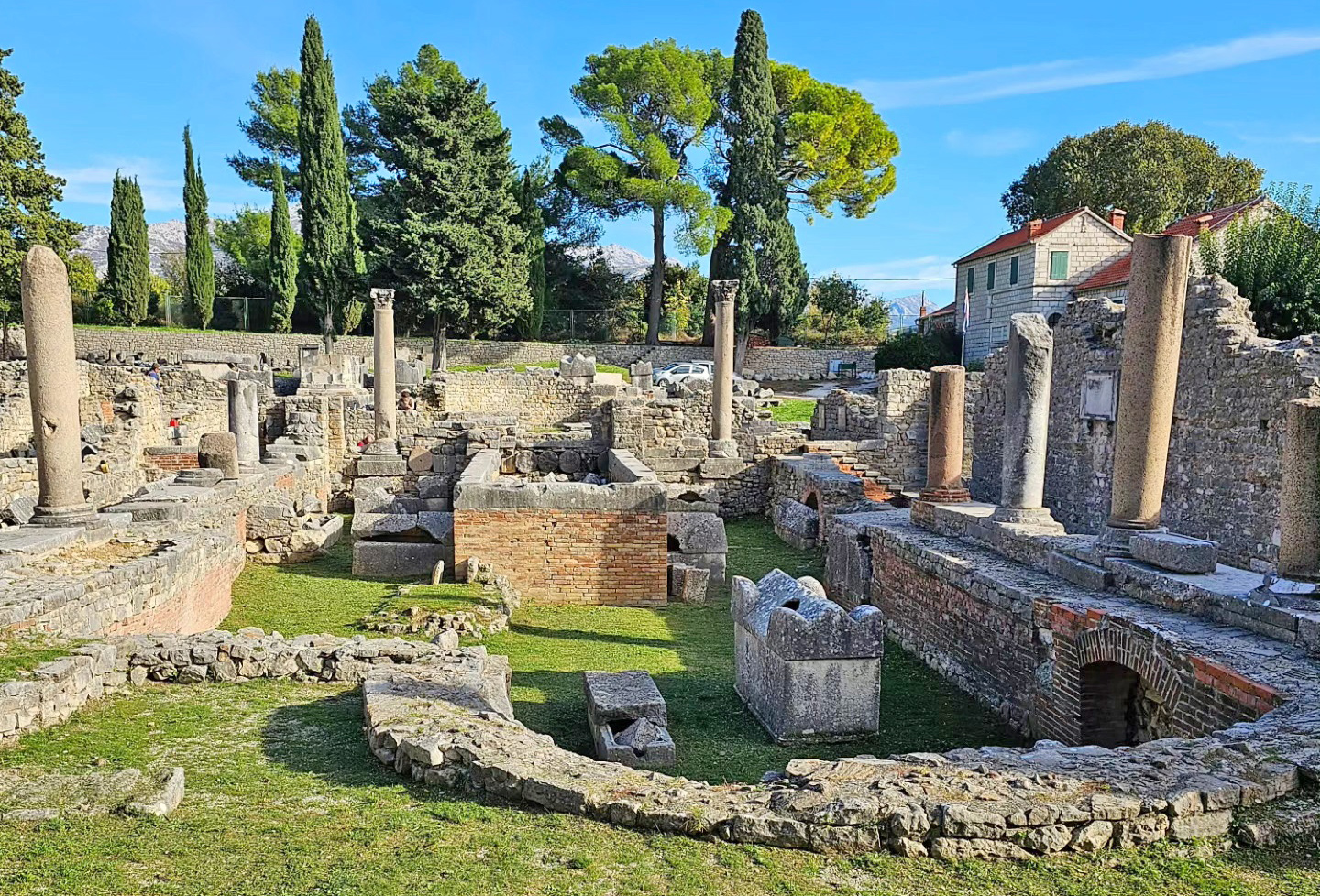
There are the ruins of Salona very close to Split where Diocletian was actually born. It was the capital of Dalmatia and with more than 60.000 residents it was one of the largest cities of the empire. It’s a UNESCO World Heritage Site since 1979. When you go Split you can make a day tour to visit this area. You can also make a day trip by speedboat to Hvar and 5 other islands and you can also see the famous Blue Cave which is a captivating cave with its mesmerizing blue water.
When you go Split either inside the walls of the old town or outside of it you will see shops selling the souvenirs of the popular TV series Game of Thrones. It is amazing that you feel like you are on the movie set. Today Split shows that it’s a big mosaic of different cultures which brought their architectural and historical heritage. You can see the magnificent harmony of the different art styles, architecture, traditions and gastronomy inherited from their ancestors throughout the centuries. One of the highlights of Split is the people watching the sun down on the benches along the promenade or enjoying the delicious Croatian meals and drinks in the restaurants or cafes by the shore. You can see they are strolling around just to relax after work and finish the day simply with pleasure. The friendly and cozy city with its modern promenade shows its Mediterranean culture.
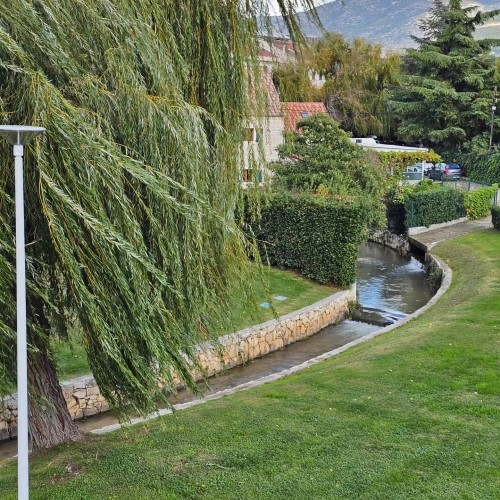
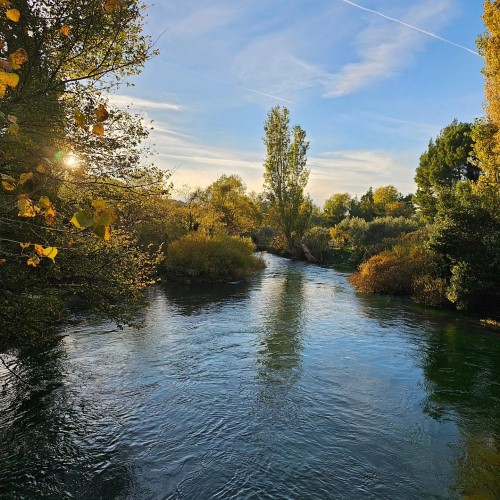
For the nature lovers Split offers its guests a unique alternative nearby; Solin. It is situated in the northeast of Split on the Adriatic Sea and the river Jadro. It actually developed on the birthplace of Diocletian, ancient Salona. It is an incredible small town with an exceptional natural beauty which is hidden there very close to Split. The town of Solin cannot be described but experienced. The river branches in the town, the ducks swimming in the water, the trees leaning on the river just form the unforgettable scenic atmosphere of Solin. It offers its guests an indescribable beauty in a peaceful and quiet area. Go there just to relax, to get rid of the negative energy you might have, dream while walking in the narrow paths of the town, watch the ducks, feed your soul with its beauty.
As an important settlement in Roman times, the small town also has many historical ruins to show its guests. The remains of the Roman Amphitheatre in Solin is an impressive example of Roman architecture. When you go to Solin don’t forget to visit the Gaspina Mill which is on the Jadro River. There were many water mills around the area but this mill is the only well-preserved one, which was constructed in the early 18th century and worked well until 1960s. later it was restored and reopened in 2008. You can visit the mill every day.
Solin hosts a lot of cultural events such as live concerts, theatre and dance competitions. It celebrates its Town Day on the 8th of September and it is also the Feast of the Nativity of the Virgin Mary. There are a lot of religious and entertainment activities and a fair that day. It is possible to reach Solin by bus from the city center of Split. The Zagreb-Split highway passes through this territory. Taking the train from Split is another option. Just go to Solin to relax and enjoy the peaceful natural beauty.